
Career advice for budding female quantum leaders

Read more of the post Career advice for budding female quantum leaders
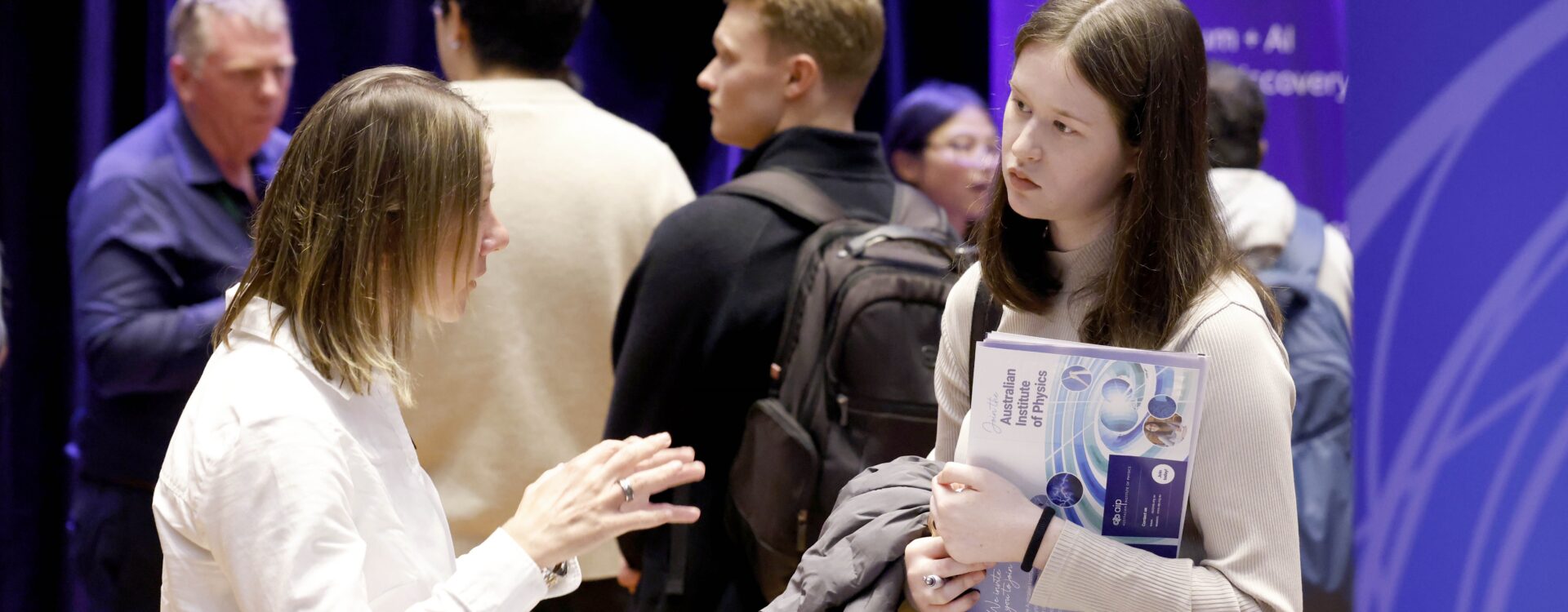
At the sold-out Quantum Future Talent 2026 Careers Fair, panellists shared their insights into hiring and quantum careers.

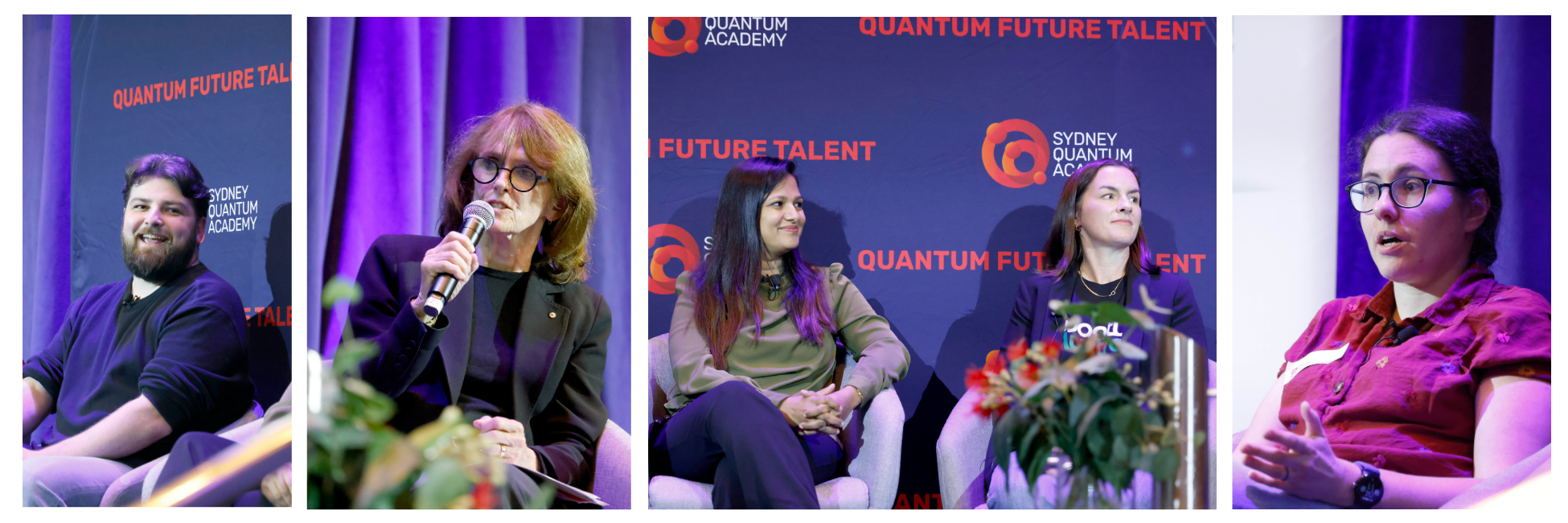
Leading figures in the local quantum ecosystem shared their advice to the next generation of specialists in a panel discussion last week at the sold-out Quantum Future Talent 2026 Careers Fair, proudly presented by Sydney Quantum Academy (SQA).
In this candid and exclusive peek ‘behind the curtain’ into quantum hiring, industry trends and the realities of working in quantum research today, panellists shared what it really takes to build a lasting career in the global quantum industry, as well as their perspectives on where the field is heading.
The ‘Preparing Australia’s Quantum Workforce: Future-proofing your career path’ panel featured:
Here’s a rundown of their top takeaways and tips for how to find a place in this rapidly expanding and diversifying sector.
With quantum technologies fast maturing, the panellists noted that opportunities across the quantum workforce are much broader than most people realise.
Reflecting on her time as Australia’s Chief Scientist, panel chair Dr Cathy Foley set the scene by reminding attendees that in order to make science the most useful, you need “wraparound – science plus” people to bring it into everyday life. And the same is increasingly true for quantum, which is expanding to encompass a variety of roles.
“[Quantum] needs engineers, salespeople, programmers, and IP specialists,” Dr Foley said.
This shift towards more operational-style roles is a growing trend as the worldwide quantum industry continues to flourish, according to Joanne Elliott from Quantum Australia.
“Globally we’re seeing around 7,500 quantum and quantum‑engaged companies, with the market now worth over US$2.5 billion, and it’s growing 30% year on year.”
Even five years ago, quantum jobs were nearly exclusively research‑based. But this is no longer the case, challenging prevailing stereotypes about quantum being the remit of academics only.
“Now, around 30% are operational roles — sales, business development, program management, finance and marketing,” said Joanne.
“Sales and business development roles are now accounting for about 15% of quantum job opportunities.”

As quantum startups mature, commercialise and recruit more people, their hiring requirements also become more varied.
“We're starting to see a maturation of a lot of these companies. And what that means in practice is that the skill sets, the general kind of interest sets that you're looking for are starting to become quite variable,” said Liam Potter from Silicon Quantum Computing.
And while a general interest in quantum might open the door to business enablement roles, the true differentiator for many quantum recruiters is “genuine passion.”
“The thing that remains consistent across every role that we hire, and frankly, every level of seniority is that you have to have a genuine passion for the field,” said Liam.
“You have to be genuinely interested in quantum compute and that interest can't be as surface level as you heard a podcast and it sounded interesting. You need to be a bit of a fanatic for this sort of stuff.”
An increasing number of job applicants are choosing to join quantum companies, drawn by the allure of quantum’s promise as the “next big thing” in tech, according to Nazia Shariff, who reviews countless CVs as a people and culture specialist at Diraq.
Fortunately, the field is also becoming more inclusive for aspiring quantum employees.
“It’s evolving, and when I joined, it was a very close‑knit circle… Now it’s changing. We’re going outside physicists and engineers,” said Nazia.
“We’re looking at local talent, not just degree qualifications – people with exceptional experience alongside deep science.”
For students in the audience considering an academic career, Dr Marika Kieferova from UTS and Google Quantum AI shared her experience working across two worlds.
“Universities and Google both have a culture of excellence – people who are absolutely passionate about what they’re doing,” Dr Kieferova said.
“But in a big company like Google, we have a big team and then there will be a [research] paper with everyone’s name on it. So if you’re someone who really wants to get credit for your own research…then a company may not be the best place for you.”
The scale of the work is also a big differentiator across both worlds.
“When you’re building one qubit in a university lab, you do a bit of everything… When you’re building a thousand qubits, one person must do one job perfectly – over and over again.”
A standout takeaway across all panellists was the importance of putting yourself out there and seeking practical experience – something that sets applicants apart from their studies or thesis alone.
From joining a student society in quantum or coming to events like Quantum Future Talent, there’s never been a better time to make these important impressions and connections.
“We’re in this kind of magic period in quantum as an industry where you can still just walk up and talk to the people doing the work…that’s not to be discounted,” said Liam.
“Just go and meet people and figure out the people who work in the space that you want to work in and you are most of the way there.”

Final advice from the panellists
To close the session, the panellists shared some parting advice:
Nazia Shariff: “One important piece is communication – please work on the communication…as we already work in a very collaborative environment between different departments.”
Dr Marika Kieferova: “Even if you’re not a technical person or you’re not an aspiring scientist, try to understand some of the basics of quantum. It’s not scary or magical and you don’t have to be a genius to understand it.”
Joanne Elliott: “What’s the next step you’re going to take? Is it that you’re going to follow up with an employer you met today, or attend another ecosystem event? You can engage with Quantum Australia, Quantum Women and all the free platforms where you can develop your skills further.”
Liam Potter: “There are many pathways into quantum. If you are genuinely passionate about this industry, there will be a door that opens for you.”
Explore current opportunities on our job board.

Read more of the post Career advice for budding female quantum leaders

Read more of the post Inside Industry Hiring: The skills that set quantum PhDs apart
![Jemy Geordy is a PhD student at Macquarie University, where sShe completed her one-year Master of Research thesis [Photo: Zixin Huan]](https://cdn.sydneyquantum.org/wp-content/uploads/2023/10/IMG_7790-2-small-Jemy-610x360.jpg)
Read more of the post Programs

Read more of the post SQA expands Industry Experience Program

Read more of the post Event Recap – Quantum Future Talent: Open Day & Careers Fair