PhD Scholarships
Our PhD Scholarship program offers students funding to work alongside some of the world’s leading quantum researchers and gain industry-ready skills.

Read more of the post PhD Scholarships

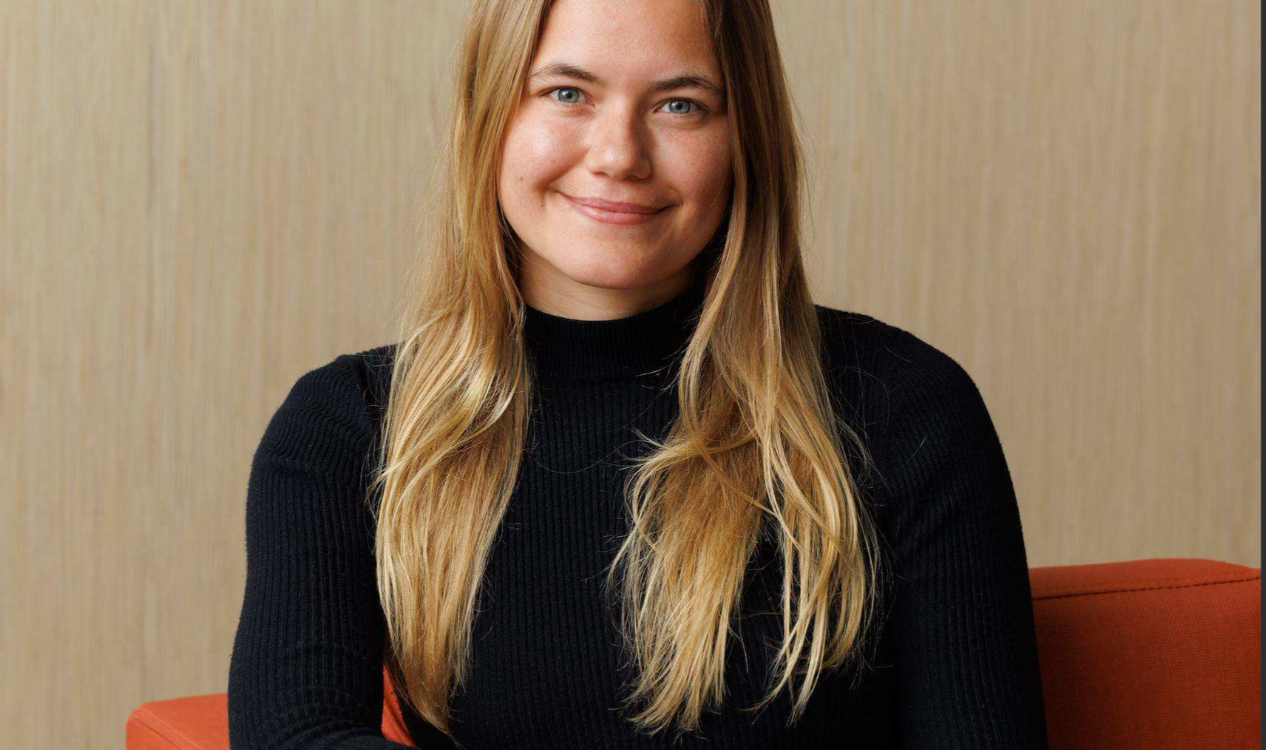
With two degrees in pure mathematics and only limited exposure to physics, a quantum PhD wasn’t originally on Rebecca Radebold’s bingo card.
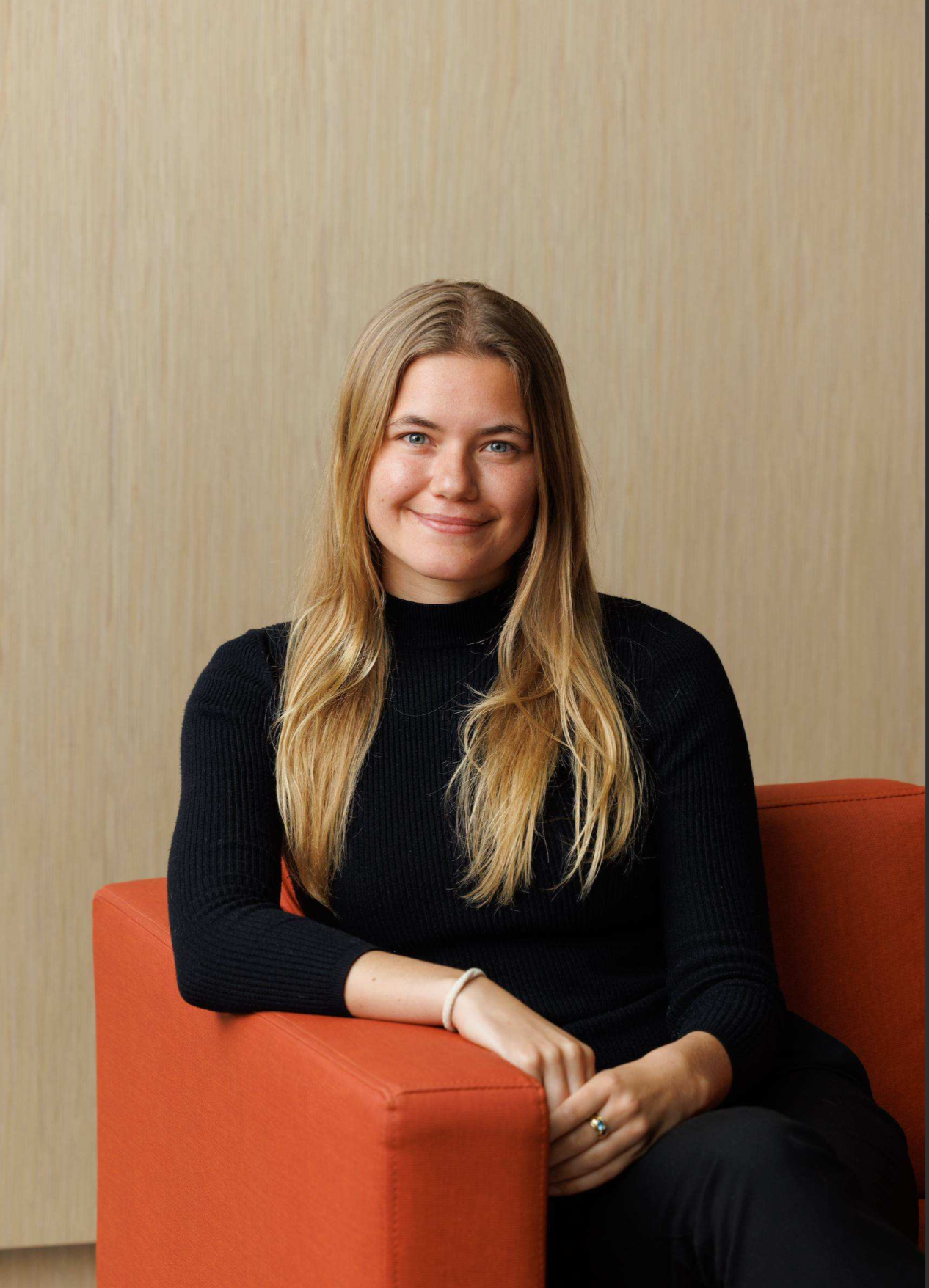
But a chance decision to take a quantum information theory course “on the side” during first semester of her master’s degree at the Technical University of Munich, Germany, proved the key to Rebecca’s future career trajectory.
“The course threw me into the deep end, but I was immediately captivated by the elegance and counterintuitive nature of quantum physics and quantum information theory,” she says.
“I started to learn about how the principles I was learning could be used to theoretically facilitate a fundamentally different mode of computation, which required collaboration between experts from mathematics, computer science, and physics.
“Given that these were all fields I was interested in, I was sold.”
Shining a light on quantum computing’s dark spots
Originally from the United States of America, Rebecca is now in the third year of her PhD at the University of Sydney thanks to the support of a Sydney Quantum Academy (SQA) scholarship. Beyond financial support, the scholarship has connected Rebecca to a vast community of researchers and students through SQA’s PhD Experience Program, offering professional development and collaboration opportunities across Sydney’s quantum ecosystem.
Under the guidance of renowned quantum experts, Professor Stephen Bartlett and Professor Andrew Doherty, her research is attempting to address one of the primary bottlenecks in making quantum computing as ubiquitous as today’s classical computers: quantum error correction.
The goal of her work seems deceptively simple from the outside – to create a protocol that helps quantum computers work more reliably, by detecting and correcting the extremely delicate physical systems that underpin how quantum computers store information. These physical systems are extremely small, naturally unstable and are prone to errors.
What makes this task more challenging than in traditional computing, however, is the unusual nature of quantum mechanics. A world where even the act of directly observing a quantum state can destroy it, making finding and fixing errors much more complicated.
“I work on methods to encode information into quantum systems and then algorithmically protect that information without disturbing the quantum states in which the information is stored,” she says.
Water bottles vs toothpicks: working within quantum’s unique rules
For the uninitiated, Rebecca likens her research to comparing water bottles (classical computers such as iPhones or laptops) and toothpicks (a piece of quantum information).
While water bottles are only prone to toppling over in extreme circumstances and are relatively simple to put back upright on a table, dealing with quantum information is like trying to balance a toothpick vertically on one end. Except not only do you need to devise a way to keep it upright, you also can’t directly look at it to see if it’s wobbling.
“Instead, we need to shine lights at it from different angles and look at its shadow to infer which direction its tilting in,” she explains.
So delicate are quantum states that if the toothpick was installed upside down, this introduces a fatal flaw that cannot be overturned.
“My work focuses on devising efficient ways of shining the light at the toothpick, inferring the direction in which its wobbling, and putting it back in its vertical position in the correct orientation as efficiently and accurately as possible.”
Once researchers can tackle these quirks and understand the most effective ways to store quantum information for extended periods of time, there are untold possibilities ahead for the development of large-scale quantum computers. For Rebecca, working on this challenge feels like being “on the brink of a technological revolution.”

A quantum leap of faith pays off
Moving halfway across the world for a PhD is a big step by any measure – but Rebecca was encouraged by Sydney’s global reputation in quantum research, the concentration of high calibre of global experts based here, and the collaborative spirit across the ecosystem, including within SQA’s four partner university communities.
“Sydney might be far away from other major research hubs, but we are well-connected both within Sydney and Australia as well as with groups around the world.
“Connecting with so many well-known researchers in the field has provided me with a solid foundation for my research career and enabled me to forge further connections internationally, both at conferences and during research visits.”
This strong foundation has opened doors to opportunities Rebecca never expected when she began her PhD. She has served as chair of SQA’s student committee (2024-2026), taken on leadership roles on university committees and has even pursued public speaking engagements as a panellist and emcee at events, including at SQA’s 2025 Quantum Future Talent Careers Fair and Open Day.
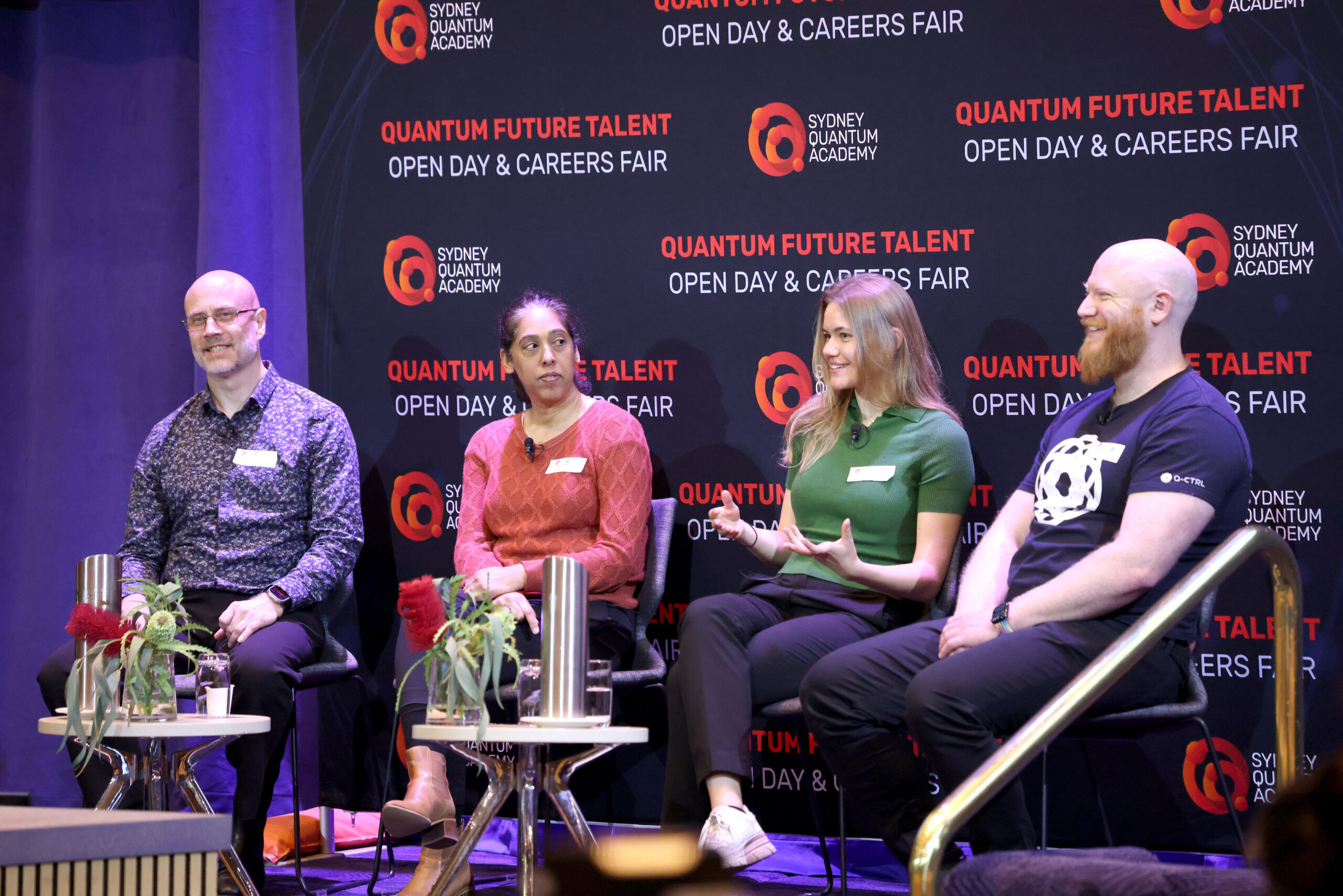
“I have had the privilege of attending workshops and conferences in London, Kyoto, and northern Spain, and have just completed a 7-week research stay at Yale in the US, all of which have led to new ideas, collaborations, and, equally importantly, a host of new friends,” she says.
Making connections to last a career
One of the most valuable parts of Rebecca’s PhD in Sydney has been all that she’s gained from the student community and the connections she’s forged across Sydney’s quantum network.
“I have learned so much from speaking to my peers, not only about their work, but also about their perspectives and the journeys that led them to quantum, Sydney, and SQA. I think this will be one of the most valuable aspects of my PhD experience,” she reflects.
The combination of research, leadership opportunities, international collaborations and professional connections has provided Rebecca a solid springboard into whatever comes next in the rapidly evolving quantum sector.
“Doing my PhD at the University of Sydney has been a pleasure. I am surrounded by students, postdocs, and faculty that bring so many different perspectives to the table that I find myself and my ideas constantly being challenged in incredibly creative, insightful, and constructive ways.”
And while completing a PhD is big time commitment – one that requires an open mind and a very deliberate approach when choosing your topic – Rebecca is genuinely surprised by how attainable it is in Sydney to achieve a healthy work-life balance. She’s even recently taken up triathlons as a way to unwind and think more clearly.
“A PhD is definitely hard work and often time-consuming, but I have been able to experience so much outside of my PhD – from discovering and competing in new sports, hiking and camping, to spending time with different friend groups on the weekends and in the evenings after work,” she says.
Her parting advice for aspiring PhD candidates?
“In the moments where you face challenges, it is always helpful to be able to lean on a genuine love for the subject, or a deep sense of curiosity.”
Find out more about our PhD scholarship programs. Or search our database of more than 100 quantum experts working on quantum technologies in Sydney who are available to supervise PhD students.
Read more of the post PhD Scholarships
Read more of the post Our PhD Scholars

Read more of the post SQA Scholar recognised in "Cosmos Quantum Quest"

Read more of the post Quantum Technology